
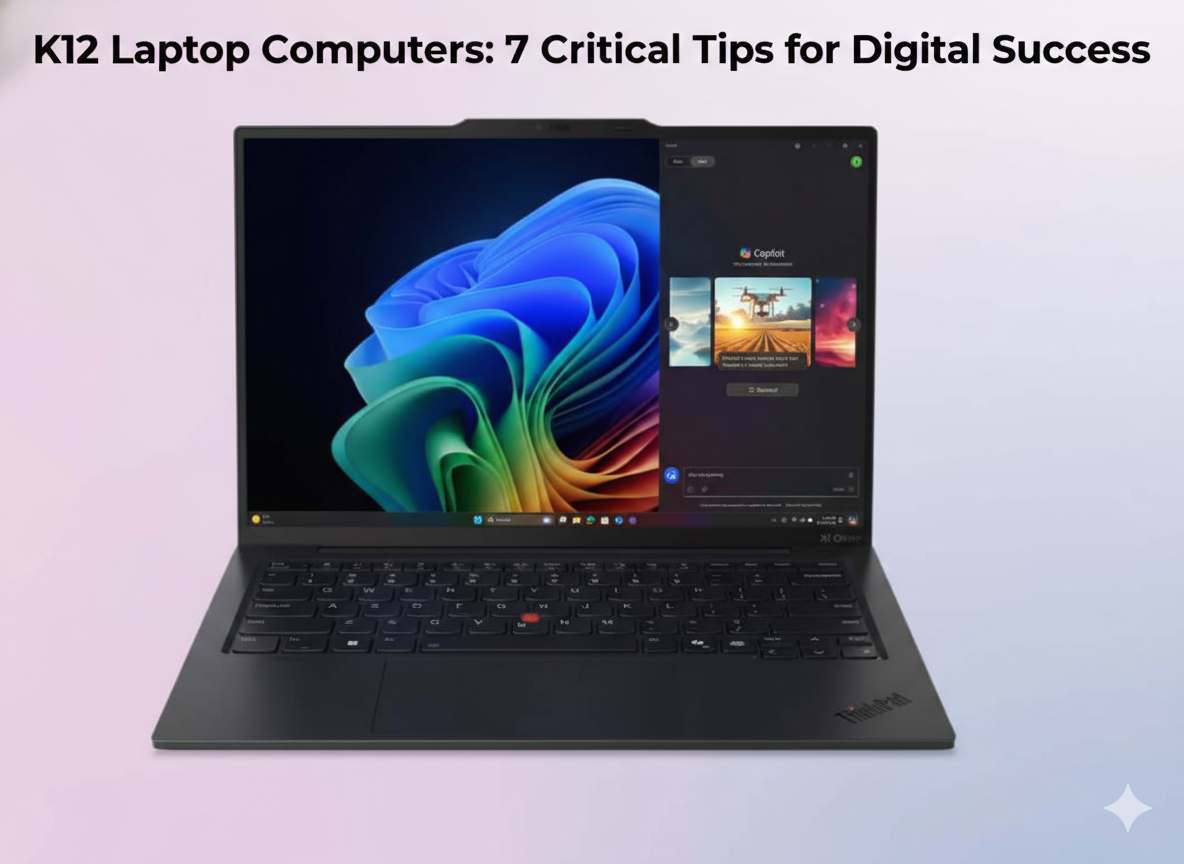
K12 Laptop Computers: 7 Critical Tips for Digital Success
K12 laptop computers are no longer just optional accessories; they are the fundamental engine driving modern pedagogy. Look, I’ve spent years analyzing educational technology implementation, and if there is one thing I have learned, it is that the classroom is an unforgiving environment for hardware. You cannot simply purchase off-the-shelf consumer devices and expect them to survive a semester, let alone a three-year lifecycle. The reality is that schools need specialized equipment designed to withstand chaos while delivering consistent performance.
When we talk about deploying k12 laptop computers, we are talking about balancing budget constraints with extreme durability requirements. From my experience working with districts, the difference between a successful 1:1 initiative and a financial disaster often comes down to understanding the nuances of specs that manufacturers like ASUS and specialized vendors like Tech to School emphasize. In this guide, I’m going to break down exactly what you need to look for, stripping away the marketing fluff to focus on what actually matters for students and IT administrators. We will cover everything from military-grade durability to the often-overlooked necessity of modular repairability.
Table of Contents
- Durability Standards for K12 Laptop Computers
- Essential Specs for Modern K12 Laptop Computers
- Health Safety in K12 Laptop Computers
- Versatile Features of Top K12 Laptop Computers
- OS Choices for K12 Laptop Computers
- Budgeting for K12 Laptop Computers Fleets
- Sustainability in K12 Laptop Computers Programs
- Deploying K12 Laptop Computers Effectively
Durability Standards for K12 Laptop Computers

Let’s be brutally honest: students destroy things. It’s not malicious; it’s just the nature of K-12 environments. If you are evaluating k12 laptop computers without putting durability at the very top of your checklist, you are setting your district up for failure. I’ve seen fleets of consumer-grade laptops decimated within six months because they couldn’t handle the physical stress of a backpack or a desk slide. The industry standard we must look for is MIL-STD-810H compliance. This isn’t just a fancy acronym; it represents a rigorous testing protocol involving drops from up to 120cm, extreme vibration, and temperature shocks. Devices that pass these tests are built to survive the inevitable.
Beyond the certification, the physical build of k12 laptop computers needs to include specific protective features. We are talking about all-around rubber bumpers that act as shock absorbers. I recall analyzing the specs of recent ASUS education models, and they emphasize spill-resistant keyboards capable of handling up to 330cc of liquid. That is essentially a full can of soda poured directly onto the keys. Without this level of protection, a single accident becomes a total loss. Furthermore, “gapless” keycaps are non-negotiable to prevent bored students from prying them off. These physical safeguards are the first line of defense in protecting your investment.
When you are sourcing these devices, verify the drop-test ratings yourself. Don’t just take the salesperson’s word for it. ISTE standards and other educational frameworks implicitly rely on hardware that works when it’s needed. If a device is in the repair shop because the hinge snapped or the screen cracked from a minor bump, it is failing its educational purpose. Durability in k12 laptop computers is directly correlated to student learning time.
Essential Specs for Modern K12 Laptop Computers
Performance in an educational setting isn’t about raw gaming power; it’s about endurance and connectivity. The most critical specification for k12 laptop computers is battery life. I cannot stress this enough: a laptop that dies at 1:00 PM is a paperweight. We need to target a “full school day” benchmark, which realistically means 10 to 12 hours of continuous use on a single charge. This allows for variation in usage patterns, screen brightness, and the natural degradation of battery health over time. If a device is rated for anything less than 10 hours, walk away.
Another technical aspect that is often undervalued until it’s too late is modular design. The best k12 laptop computers are designed to be serviced quickly. You want devices where the keyboard, battery, I/O ports, and cooling modules can be replaced independently. This modularity allows school IT departments to perform repairs in-house in minutes, rather than shipping units off for weeks. It reduces downtime significantly. Additionally, connectivity is paramount. With high-density classrooms where thirty students might be streaming video simultaneously, support for Wi-Fi 6 or 6E is essential for maintaining stable connections. For districts serving areas with the digital divide, looking for models with integrated 4G LTE is a forward-thinking move.
I advise IT directors to look under the hood. Don’t get distracted by screen resolution alone. Check the ease of repairability scores. Check the specific Wi-Fi card generation. These seemingly minor details in k12 laptop computers determine the daily frustration levels of both teachers and students. Reliable hardware fades into the background; poor hardware becomes the center of attention.
Health Safety in K12 Laptop Computers
In the post-pandemic era, we have to look at hardware through a lens of hygiene and health. Shared devices are vectors for germs, plain and simple. Leading manufacturers have recognized this and are now integrating antimicrobial treatments into the chassis of k12 laptop computers. For instance, ASUS uses an Antimicrobial Guard that is ISO 22196 certified to inhibit bacterial growth on frequently touched surfaces like keyboards and touchpads. This isn’t a gimmick; in a classroom where a laptop might change hands multiple times a day, reducing the viral load on surfaces is a responsible health measure.
Beyond hygiene, we must consider the physiological impact of increased screen time. As digital learning becomes the norm, students are staring at k12 laptop computers for hours on end. This exposure necessitates displays that prioritize eye care. I strongly recommend seeking out devices with TÜV Rheinland-certified low-blue-light screens. These panels reduce the emission of harmful blue light spectra that can cause eye strain and disrupt sleep patterns. It is a subtle feature that pays dividends in student well-being and focus.
Prioritizing these health features sends a strong message to parents and the community that the school cares about the whole student, not just their test scores. When selecting k12 laptop computers, adding health safety features to your RFP (Request for Proposal) ensures you are getting modern, responsible technology. It distinguishes a thoughtful deployment from a generic bulk purchase.
Versatile Features of Top K12 Laptop Computers

Pedagogy is evolving, and the form factor of k12 laptop computers needs to keep up. The traditional clamshell laptop is fine for typing essays, but it limits creativity. This is why I am a huge proponent of 2-in-1 designs with 360-degree hinges. These devices allow students to transition seamlessly from laptop mode for writing to tent mode for consumption and tablet mode for creation. This versatility supports a wider range of learning styles and activities, from digital painting in art class to annotating scientific diagrams in biology.
Let’s talk about cameras. The standard webcam is insufficient for a comprehensive learning experience. The best k12 laptop computers now feature dual cameras, including a “world-facing” camera located on the keyboard deck. This innovation allows students to take photos and videos while holding the device in tablet mode, looking at the screen as a viewfinder. This is crucial for documenting science experiments, recording field trips, or creating multimedia projects. It turns the laptop into a creative studio.
Finally, stylus integration is a game-changer for STEM and arts. However, a loose stylus is a lost stylus. You must look for k12 laptop computers with garaged, rechargeable styluses. I’ve seen models where a 15-second charge in the garage provides 45 minutes of use. This capability is vital for math, where showing work is necessary, and for note-taking strategies that improve retention. Edutopia articles often highlight how digital inking can bridge the gap between traditional handwriting and digital organization.
OS Choices for K12 Laptop Computers
The battle between operating systems is often the most contentious part of selecting k12 laptop computers. For years, ChromeOS has dominated the market due to its simplicity, speed, and cloud-native architecture. It is undeniably efficient for managing thousands of devices with a small IT team. If your district is deeply integrated into the Google Workspace ecosystem, Chromebooks are the path of least resistance. They boot up in seconds and stripping them down to a browser interface minimizes distractions.
However, we are seeing a resurgence of Windows in the education sector, particularly for older students. Windows-based k12 laptop computers, like the ASUS BR series, offer robust offline capabilities and compatibility with professional-grade software that ChromeOS simply cannot run natively. If your CTE (Career and Technical Education) programs require full versions of Adobe Creative Cloud or AutoCAD, Windows is mandatory. It also prepares high school students for the workforce, where Windows remains the standard operating environment.
My advice is to avoid a one-size-fits-all approach. A hybrid strategy often works best, utilizing ChromeOS for elementary and middle schools while deploying Windows-based k12 laptop computers for high schools. This ensures that younger students have an easy-to-use interface while older students gain exposure to the tools they will use in university and their careers. It is about matching the OS to the pedagogical complexity.
Budgeting for K12 Laptop Computers Fleets

Budget constraints are the reality for 99% of schools, but being cheap is expensive in the long run. When budgeting for k12 laptop computers, you have to look at the Total Cost of Ownership (TCO), not just the unit price. A cheap device that needs to be replaced in two years costs more than a robust device that lasts four. Interestingly, the market has shifted to embrace high-quality refurbished units. Sources like Tech to School highlight that certified refurbished devices—especially high-value items like MacBooks and iPads—allow schools to stretch their dollars further.
By opting for refurbished models, a district can often afford a higher specification tier or achieve a 1:1 student-to-device ratio without increasing capital expenditure. This approach democratizes access to premium k12 laptop computers that might otherwise be out of reach. It is critical, however, to work with reputable vendors who offer warranties on refurbished stock. You aren’t buying used gear from a garage sale; you are buying certified, tested equipment.
Furthermore, smart lifecycle management involves trading in old fleets. The residual value of Apple products, for instance, is surprisingly high. Implementing a buy-back program for your old k12 laptop computers can generate significant funds to subsidize the next refresh cycle. Financial creativity is just as important as technical acumen in this space.
Sustainability in K12 Laptop Computers Programs
Sustainability is moving from a buzzword to a procurement requirement. Schools are increasingly viewed through a sustainability lens, and the management of k12 laptop computers is a major factor in a district’s carbon footprint. Choosing durable hardware that lasts longer is the most effective way to reduce e-waste. Every year we extend the life of a device is a year we aren’t manufacturing a new one, saving resources and energy.
This ties back into the repairability argument. Modular k12 laptop computers that can be fixed rather than discarded contribute to a circular economy. Additionally, the trend toward purchasing refurbished units is inherently green. It extends the functional life of high-end components that would otherwise end up in a landfill. Teaching students on refurbished hardware also offers a practical lesson in environmental stewardship.
When you are drafting your technology plan, explicitly mention the environmental impact of your choices. Boards of Education are becoming more sensitive to these issues. Positioning your choice of k12 laptop computers as both fiscally responsible and environmentally sustainable creates a compelling narrative that is hard to vote against. Common Sense Education provides resources that can help align technology choices with broader ethical goals.
Deploying K12 Laptop Computers Effectively
The hardware is only good if it can be deployed efficiently. In the past, imaging thousands of machines was a summer-long nightmare for IT staff. Today, modern k12 laptop computers must support “zero-touch enrollment.” This feature, available on both ChromeOS and Windows (via Autopilot), is a non-negotiable requirement for any large-scale deployment. It allows devices to be shipped directly to schools—or even students’ homes—and automatically configure themselves the moment they connect to the internet.
I have spoken to IT directors who saved hundreds of man-hours using zero-touch deployment. The device pulls down security policies, apps, and user settings from the cloud without anyone touching a screwdriver or a USB drive. This scalability is what makes the 1:1 model feasible for large districts. If the k12 laptop computers you are considering do not support this, you need to reconsider your choice immediately.
Effective deployment also means planning for the “day after.” Do you have a plan for loaner devices when a student breaks theirs? Do you have a charging infrastructure in place? The logistics of managing thousands of k12 laptop computers are complex. Automation and cloud management tools are your best friends in keeping the fleet operational and secure.
Conclusion
Choosing the right k12 laptop computers is a high-stakes decision that impacts the daily lives of students and teachers. It is not just about finding the lowest price tag; it is about finding the right balance of durability, performance, and manageability. From ensuring MIL-STD-810H toughness to leveraging the cost-savings of refurbished markets, every detail matters. By prioritizing features like battery life, modular repairability, and health-focused screens, you invest in a tool that truly empowers education rather than hindering it. My advice is to take the long view. Invest in quality, plan for the lifecycle, and remember that these devices are the windows through which our students see the world.
Watch Videos
Frequently Asked Questions
What is the most important feature for k12 laptop computers?
Durability is arguably the most critical feature. K12 laptop computers must meet MIL-STD-810H standards to withstand drops, spills, and daily abuse in a classroom environment. Without this, even the fastest laptop will become useless quickly.
Are refurbished k12 laptop computers a good idea for schools?
Yes, absolutely. Certified refurbished devices allow schools to acquire high-quality hardware at a fraction of the cost. This strategy helps maximize budgets and supports 1:1 programs, provided the devices come with a solid warranty.
How much battery life do k12 laptop computers need?
Schools should target devices that offer 10 to 12 hours of real-world battery life. This ensures the k12 laptop computers last through the entire school day without needing to be tethered to a charging cart, which disrupts learning.
Should schools choose ChromeOS or Windows for k12 laptop computers?
It depends on the grade level. ChromeOS is excellent for K-8 due to its simplicity and ease of management. However, Windows is often better for high school students who need access to professional software and offline capabilities.
What is zero-touch enrollment for k12 laptop computers?
Zero-touch enrollment allows k12 laptop computers to automatically configure themselves with school settings and apps as soon as they connect to the internet. This eliminates the need for IT staff to manually set up each device, saving massive amounts of time.