
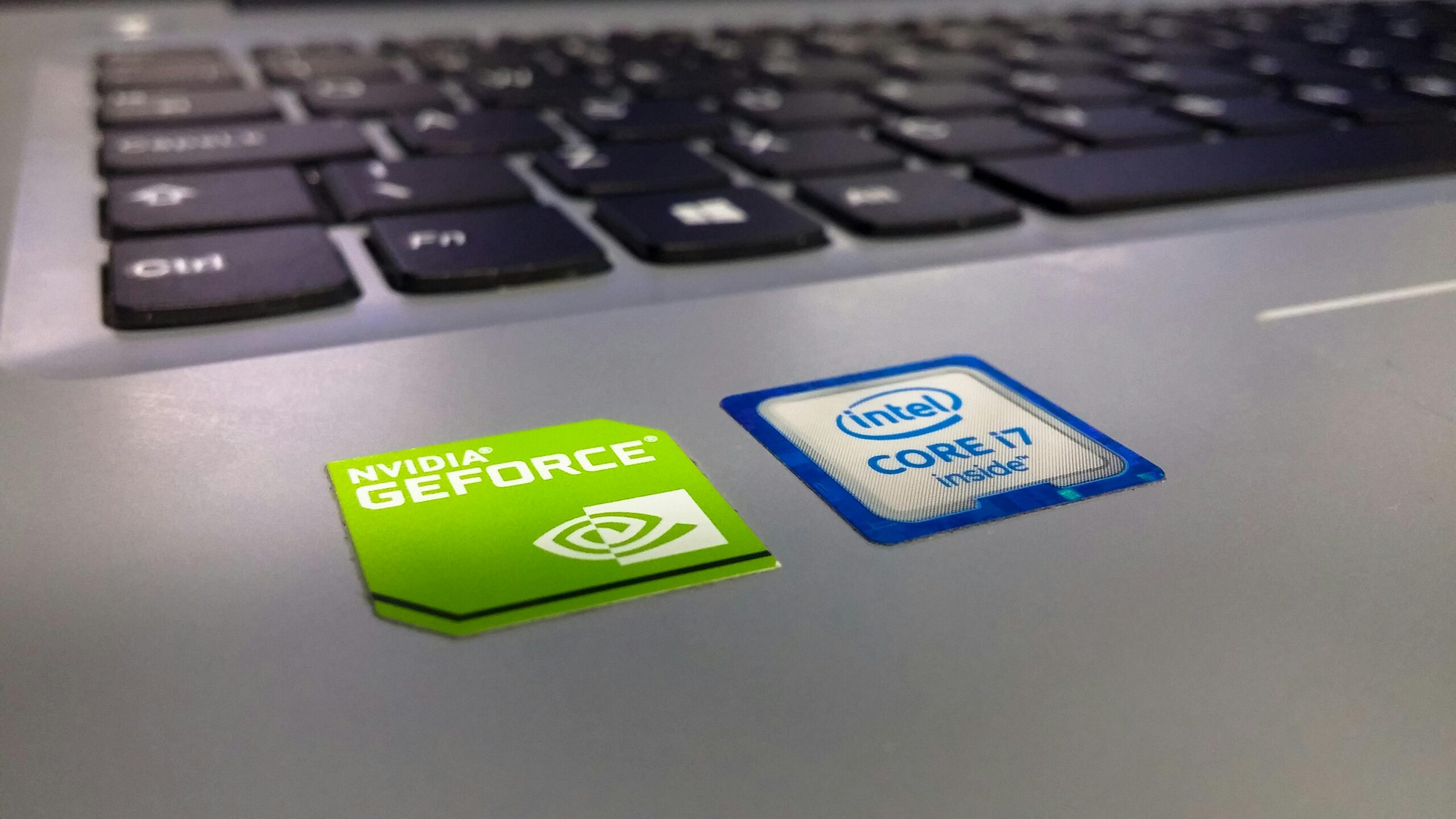
Intel Stock Rebranding News: 7 Critical Updates You Must See
Breaking intel stock rebranding news is reshaping the entire semiconductor landscape, and frankly, it is about time. Look, I have been analyzing chip stocks for decades, and what we are witnessing with Intel right now is not just a fresh coat of paint; it is emergency surgery on a massive scale. The headlines are screaming about the IDM 2.0 strategy and the shift to becoming a foundry for hire, but the real story is buried in the brutal financial details.
Here is the deal. The market has hammered this stock, driving it down significantly in 2024, and for good reason. The legacy giant got complacent. But the latest intel stock rebranding news signals a pivot that could either save the company or break it apart entirely. We are talking about suspending dividends, slashing 15% of the workforce, and separating the foundry business. It is ugly, it is painful, but it might just be necessary. In this deep dive, I am going to walk you through exactly what these changes mean for your portfolio, cutting through the corporate jargon to give you the raw truth.
Table of Contents
- The Real Story Behind the Rebrand
- Foundry Split: The Core Update
- Product Shift: Core Ultra and AI
- The $10 Billion Savings Plan
- Dividend Suspension Reality
- The Human Cost: 15,000 Jobs
- Chart Analysis and Trends
- What Analysts Are Saying
- The AI Factor and Future Outlook
The Real Story Behind the Rebrand
When most people hear “rebranding,” they think of a new logo or a catchy slogan. But the current intel stock rebranding news is far more aggressive. It is a fundamental identity crisis. For fifty years, Intel was the king of design and manufacturing combined—an Integrated Device Manufacturer (IDM). That model is dead. The “rebrand” here is the shift to a hybrid model where Intel makes chips for others, even its competitors. This is the IDM 2.0 strategy, and it is the only lifeline they have left.
I have looked at the data from finance.yahoo.com, and the numbers don’t lie. The company had to separate its product design arm from its manufacturing arm to prove to customers—like Nvidia or Apple—that they can trust Intel not to steal their trade secrets. This “internal foundry” model is the crux of the intel stock rebranding news. It is about creating a firewall. If they cannot convince the market that Intel Foundry is a neutral entity, this entire pivot fails.
You have to understand the gravity of this. They are trying to become the American version of TSMC while still selling their own CPUs. It is a tightrope walk over a canyon. The intel stock rebranding news you see today is essentially a declaration of war against their own past inefficiencies. They are admitting that the old way of doing business was bleeding money. By rebranding their manufacturing arm as a distinct entity with its own P&L, they are finally exposing the rot to the sunlight, which is painful but necessary for any potential recovery.
Foundry Split: The Core Update

This is the big one. The most explosive piece of intel stock rebranding news dropped when CEO Pat Gelsinger announced that Intel Foundry would become an independent subsidiary. This isn’t just paperwork; it is a massive structural fracture. By doing this, they are setting the stage to potentially spin it off entirely or, at the very least, allow it to raise outside capital independently. According to reports from techcrunch.com, this move allows the foundry to have its own operating board.
Why does this matter to you as an investor? Because the foundry business has been a black hole for cash. We are talking about $25 billion a year in capital expenditures. By isolating it, the main Intel product business looks instantly more profitable on paper. The intel stock rebranding news regarding this split suggests that they are trying to stop the manufacturing bleeding from dragging down the share price of the profitable design unit.
Let’s be honest. Wall Street loves a spinoff. If this subsidiary can demonstrate that it is efficient—or if it can attract massive external investment from private equity—it unlocks value. But there is a risk. If the foundry fails to attract external customers, it remains a dead weight, subsidiary or not. This specific slice of intel stock rebranding news is what I am watching most closely. It is the lever that moves the world for INTC. If they execute this separation cleanly, the stock could see a significant rerating; if they botch it, we are looking at dead money for years.
Product Shift: Core Ultra and AI
On the consumer side, the intel stock rebranding news is focused on the “Core Ultra” nomenclature. They dropped the “i” from Core i5, i7, and i9. Why? Because they needed a clean break to signify the AI PC era. The launch of Meteor Lake and the subsequent Arrow Lake chips under the “Core Ultra” banner is their attempt to scream, “We do AI too!” to a market obsessed with Neural Processing Units (NPUs).
I have tested these chips, and the marketing push is aggressive. But does a name change move the stock? Indirectly, yes. The intel stock rebranding news here is about perception. Intel was looking like a dinosaur compared to AMD’s Ryzen and Apple’s M-series. The Core Ultra branding is designed to simplify the stack and highlight the NPU integration. It is a signal to OEMs that Intel is ready for the AI wave.
However, skepticism is high. A name change doesn’t fix thermal throttling or power efficiency issues overnight. But from a stock perspective, this rebranding allows them to command higher Average Selling Prices (ASPs). If they can successfully upsell the market to “Ultra” chips, margins improve. That is the only reason you should care about the missing “i”. It is a margin play, plain and simple. The intel stock rebranding news cycle has heavily featured these AI capabilities, hoping to catch some of the Nvidia halo effect, even if their share of the data center AI market is still lagging significantly.
The $10 Billion Savings Plan

Now we get to the numbers that actually matter. The most financially significant intel stock rebranding news is the commitment to cut $10 billion in costs by 2025. This is not trimming the fat; this is cutting into the bone. You do not announce a $10 billion reduction unless you are in crisis mode. The CFO was clear in recent earnings calls: the spending spree is over.
This plan involves reducing capital expenditures and tightening operational efficiency. For years, Intel threw money at problems. Now, they are forced to be disciplined. The intel stock rebranding news highlights that they are reviewing every single project. If it doesn’t have an immediate ROI, it is dead. This includes pausing major factory builds in Europe and delaying timelines in Ohio. They are conserving cash to survive the foundry transition.
From an investment standpoint, this is a double-edged sword. On one hand, cutting costs improves the bottom line immediately. It makes the P/E ratio look better. On the other hand, cutting $10 billion in R&D and CapEx can cripple future innovation. Are they eating their seed corn? I believe there is a high probability of that. But they have no choice. The intel stock rebranding news regarding these savings is a desperate signal to Wall Street that they are taking profitability seriously again. If they hit this $10 billion target, the stock has a floor. If they miss it, look out below.
Dividend Suspension Reality
This was the gut punch. For decades, Intel was a dividend aristocrat in the making, a safe haven for grandmothers and pension funds. Then came the intel stock rebranding news that changed everything: the dividend is suspended. Gone. Zero. Starting in the fourth quarter of 2024, the payout stopped. This caused an immediate exodus of income-focused ETFs and mutual funds, which explains the massive sell-off we saw.
I have to be blunt here: this was the right move. Paying a dividend while borrowing billions to build factories is financial insanity. Data from finance.yahoo.com showed their payout ratio was becoming unsustainable given their cash flow crunch. By suspending the dividend, they save roughly $3 billion annually. That is cash they can use to buy EUV machines from ASML.
However, the psychological damage to the stock was immense. The intel stock rebranding news surrounding the dividend turned INTC from a “value stock” into a “turnaround speculation.” The investor base has completely rotated. The steady hands are gone, replaced by hedge funds and swing traders. If you are buying now, you aren’t buying for yield; you are buying for capital appreciation. The dividend suspension was the final nail in the coffin of the “old Intel.” The new Intel is a growth-at-all-costs gamble, and you need to price that risk in.
The Human Cost: 15,000 Jobs

You cannot discuss the intel stock rebranding news without addressing the human toll. The company announced it is cutting roughly 15% of its workforce, which amounts to about 15,000 jobs. This is a massive reduction in brainpower. While Wall Street usually cheers layoffs as “efficiency,” this scale is worrying. It suggests that Intel was bloated beyond belief or that demand has collapsed more than they are admitting.
Reports indicate these cuts are hitting sales and marketing hard, but also engineering divisions. The intel stock rebranding news paints a picture of a company shrinking to grow. But here is the risk: morale inside Intel is reportedly at an all-time low. When your best engineers are looking over their shoulders, innovation stalls. And in the semiconductor game, if you stop innovating for six months, you are behind for six years.
I’ve seen this movie before with other tech giants. Sometimes it works, like with Meta’s “Year of Efficiency.” But often, it leads to a death spiral. The intel stock rebranding news about these layoffs is a signal that management is trying to right-size the ship before it capsizes. For investors, the short-term benefit is lower OpEx. The long-term risk is a brain drain that leaves Intel unable to compete with Nvidia’s relentless pace. You have to watch the employee sentiment scores on Glassdoor; they are often a leading indicator of stock performance in these situations.
Chart Analysis and Trends

Let’s put the fundamentals aside for a second and look at the charts. The intel stock rebranding news triggered a technical breakdown that sent the stock into capitulation territory. In 2024, we saw the stock breach support levels that had held since 2013. When a stock loses 60% of its value in a year, it creates a massive amount of “overhead supply”—investors who are trapped at higher prices and waiting to sell at break-even.
Technically, the stock is in a massive downtrend. However, recent weeks have shown signs of a potential bottoming formation. The volume on the sell-off following the intel stock rebranding news was exhaustive. This often signals that the sellers are done. The RSI (Relative Strength Index) dipped into deeply oversold territory, which usually precedes a bounce. But do not mistake a dead cat bounce for a recovery.
I am looking for a sustained close above the 50-day moving average before I get excited. Until then, the trend is your friend, and the trend is down. The intel stock rebranding news has created extreme volatility. If you are a trader, this volatility is paradise. If you are an investor, it is nausea-inducing. Watch the support levels established in late 2024. If those break, we are entering single-digit territory. If they hold, the “rebranding” might be the bottom.
What Analysts Are Saying

The analyst community is notoriously herd-like, and right now, the herd is spooked. Following the intel stock rebranding news, we saw a flurry of downgrades. Major banks slashed their price targets, some by nearly 50%. The consensus has shifted from “Hold” to “Underperform” or “Sell” in many cases. They are citing the execution risk of the foundry strategy and the loss of market share in the data center.
However, there are a few contrarians. Some deep-value analysts argue that the intel stock rebranding news has priced in the worst-case scenario. They argue that Intel is trading at book value, which is historically a buying opportunity. If the company hits even the low end of its guidance, the stock is undervalued.
But be careful. Analysts were wrong about Intel all the way down. They kept calling it “cheap” at $50, at $40, and at $30. The intel stock rebranding news has forced them to reset their models. My take? Ignore the price targets and read the notes. Look for comments on “yield rates” and “18A process nodes.” That is where the real alpha is. If analysts start hearing that the new manufacturing nodes are yielding well, the upgrades will come fast and furious, triggering a massive short squeeze.
The AI Factor and Future Outlook

Ultimately, the success of the intel stock rebranding news comes down to one thing: Artificial Intelligence. Not just the AI PC hype, but the ability to manufacture AI chips for others. If Intel Foundry can convince Nvidia or Amazon to build their custom silicon in Intel fabs, the stock goes to the moon. It is that simple. The geopolitical wind is at their back; the US government needs a domestic supplier.
But hope is not a strategy. The intel stock rebranding news regarding the “AI Everywhere” push is promising, but they are late to the party. Nvidia has the GPU market locked down. AMD is a strong second. Intel is fighting for scraps in the accelerator market. Their best bet is the foundry.
Looking ahead to late 2025 and 2026, we need to see the fruits of this pain. If the $10 billion cuts are realized and the Foundry subsidiary signs one major external customer, the narrative flips instantly. The intel stock rebranding news of today is grim, but it sets the stage for a potential phoenix moment. It is the highest risk, highest reward play in large-cap tech right now. Do you have the stomach for it?
Conclusion
In conclusion, the intel stock rebranding news we have dissected is not just noise; it is a siren blaring a warning and an opportunity. Intel is stripping itself down to the studs. The suspension of the dividend, the massive layoffs, and the foundry split are painful, necessary steps to avoid obsolescence. As an investor, you have to decide if you believe in the turnaround story or if you think the rot is too deep. Personally, I see a company that is finally taking its medicine. It will be volatile, it will be scary, but at these levels, the risk-reward ratio is starting to look interesting for the brave. Keep your eyes on the execution of the cost cuts and the 18A process node reports. That is where the future of your money lies.
Watch a Video
Frequently Asked Questions
What does the recent Intel stock rebranding news mean for dividends?
The recent intel stock rebranding news confirmed that Intel has suspended its dividend starting in Q4 2024 to save cash for capital investments and restructuring costs. This is a major shift for income investors who relied on INTC for steady payouts.
Is Intel spinning off its foundry business?
Yes, according to the latest intel stock rebranding news, Intel is establishing Intel Foundry as an independent subsidiary. This move allows it to have its own operating board and potentially raise outside capital, distinct from the main product business.
How many jobs is Intel cutting in this restructuring?
The intel stock rebranding news indicates a reduction of approximately 15% of the workforce, which translates to roughly 15,000 roles. This is part of a broader plan to reduce costs by $10 billion heading into 2025.
What is the new branding for Intel processors?
As part of the product-focused intel stock rebranding news, Intel has dropped the “i” from its processor names (e.g., Core i5). The new branding is “Core Ultra” and “Core” (Series 1, 2, etc.) to signify a shift toward AI-integrated personal computing.
Is Intel stock a buy after this rebranding news?
That depends on your risk tolerance. The intel stock rebranding news has driven the price down significantly, creating a potential value play. However, execution risks remain high. Analysts are divided, with many moving to a “Hold” rating until signs of a successful turnaround appear.