A digital revolution is quietly transforming the developing world. In 2025, only 35% of people in developing nations have internet access compared to over 80% in developed countries, yet this gap is rapidly narrowing thanks to satellite broadband and community-driven initiatives. From solar-powered Wi-Fi kiosks in Senegal to community cellular networks in South Africa, and Starlink satellites delivering 100 Mbps speeds to remote African trains, innovative solutions are finally making connectivity affordable and accessible where traditional infrastructure remains impractical. This shift isn’t charity—it’s transformative economics, promising to add $2 trillion to developing nations’ collective GDP and create 140 million jobs by bridging connectivity gaps.
Satellite Internet: The Game-Changer
Satellite technology has emerged as the fastest path to universal connectivity. In 2025, over 5,000 satellites orbit Earth, with launches occurring every 4–5 days, promising expanded coverage across Africa, Asia, and Latin America. Starlink, Eutelsat’s OneWeb constellation, and emerging providers are prioritizing developing regions where terrestrial infrastructure is prohibitively expensive.
Airtel Africa’s historic 2025 breakthrough perfectly illustrates this potential: satellite internet delivered 100 Mbps download and 20 Mbps upload speeds to a train traveling 669 kilometers through dense African forest—terrain where traditional cell towers are economically unfeasible. This isn’t just theoretical; it’s deployable today. Airtel is now extending satellite services across Nigeria, Democratic Republic of Congo, Zambia, Madagascar, and Gabon.
For rural and island communities, satellite Internet is transformative. Asia-Pacific satellite broadband subscribers grew from 616,000 in 2023, with India projected to become the primary market by 2025 as government spectrum pricing for LEO (Low Earth Orbit) satellites becomes competitive.
.
Community-Driven Connectivity: Local Solutions
While satellites offer reach, community initiatives provide affordability and sustainability. The Internet Society Foundation’s 2025 BOLT Grant Program funded nine groundbreaking projects across developing nations, totaling nearly $2 million in support.
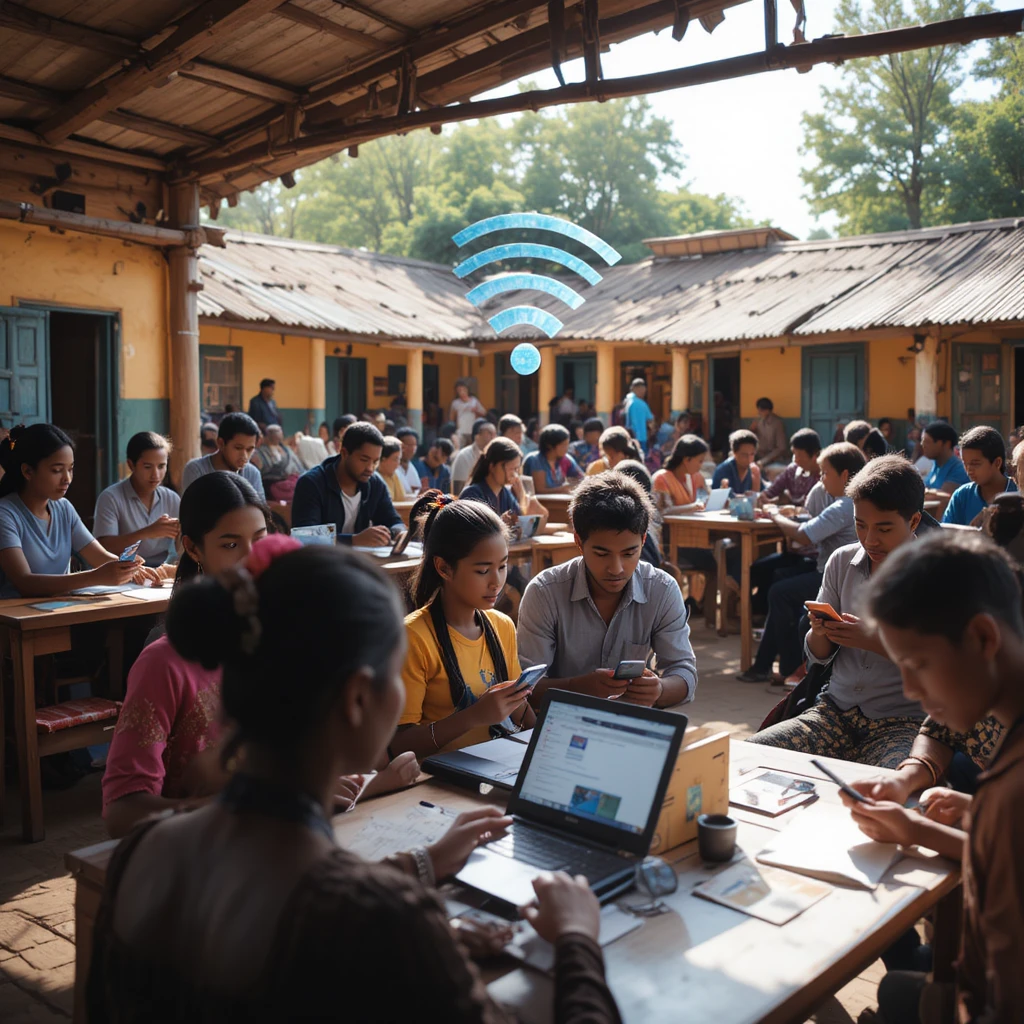
In Kenya, the Mawingu Foundation is bridging digital divides by providing affordable connectivity to rural schools, hospitals, and community centers—paired with digital skills training. In Uganda, WOUGNET pilots free wireless access at schools, markets, and hospitals, creating “Digital Empowerment Centers” that teach digital literacy alongside internet access. Nepal’s “Connect My Village” initiative installed 25 public Wi-Fi hotspots across mountain communities, while Senegal’s ElleSolaire deploys solar-powered internet kiosks in villages, combining connectivity with renewable energy access and vocational training.
South Africa’s iNethi project demonstrates innovative local ownership—developing community-based cellular infrastructure integrated with Wi-Fi hotspots, enabling smartphones to access genuinely affordable broadband managed by local ISPs.
The Path Forward
By 2025, the digital divide is narrowing—not disappeared, but shifting. Satellite constellations now cover previously unreachable territories. Community initiatives prove that local ownership and affordability work where corporate-only models fail. The World Bank’s goal of raising developing-world internet access to 75% by 2030 is achievable. For over 2 billion people currently offline, 2025 marks the year when connectivity became inevitable, not aspirational.
free internet developing countries, satellite internet 2025, OneWeb Starlink, digital divide, rural broadband, community Wi-Fi, internet access Africa, connectivity initiatives, African internet, Asian broadband, remote area internet, BOLT grant program, digital inclusion 2025, affordable internet solutions, LED internet access
Passionate Technology Specialist with deep expertise in mobile devices and computers, dedicated to exploring cutting-edge innovations and emerging tech trends. Driven by curiosity to understand and evaluate the latest breakthroughs in smartphone technology, AI-powered hardware, and computing solutions. Strong background in technical analysis, hands-on device testing, and identifying how new inventions can transform user experience. Committed to staying ahead of industry developments and communicating complex tech concepts to both professionals and general audiences. Enthusiastic advocate for technological advancement who believes innovation should enhance everyday life and solve real-world problems.